Worried that a dental implant might be painful? You’re not alone.
It’s one of the biggest reasons people delay treatment. After all, the idea of placing something into your jaw sounds intense.
In practice, the level of discomfort associated with dental implant treatment is often less significant than many people anticipate.
In this guide, we’ll break down exactly what dental implant treatment feels like, step by step, so you know what to expect, what’s normal, and when to be concerned.
The Short Answer: Discomfort Yes, Severe Pain Usually No
Short answer: You may feel discomfort, but severe pain is uncommon.
The procedure is done under local anaesthesia, so the area is completely numb. You might feel some pressure or vibration, but not sharp pain.
If you’re anxious or having a more complex procedure, sedation options are available to help you stay relaxed.
Post-operative discomfort following implant placement is often comparable to that experienced after a tooth extraction, and typically improves within a few days with appropriate pain management.
What Actually Happens And When It Hurts
Understanding the staged nature of dental implant treatment helps set realistic pain expectations from the outset.
Stage 1: Consultation and Imaging
At Bexley Dental, implant assessments include 3D imaging and a comprehensive clinical examination. This stage is completely non-invasive. This stage is completely non-invasive. The imaging provides detailed visualisation of bone volume, density, and proximity to anatomical structures including the inferior alveolar nerve (IAN) and the maxillary sinus, both of which are critical to safe implant placement. Accurate pre-surgical planning at this stage directly reduces intraoperative and post-operative complications.
Stage 2: Bone Grafting (If Required)
Not everyone needs a bone graft. But if your tooth has been missing for a while, the bone in that area may have shrunk. In simple terms, a bone graft helps rebuild the foundation so the implant has enough support. After the procedure, you may feel some soreness, similar to a tooth extraction, which is usually manageable with pain relief.
What you’ll feel: Mild to moderate soreness for a few days
Stage 3: Implant Placement
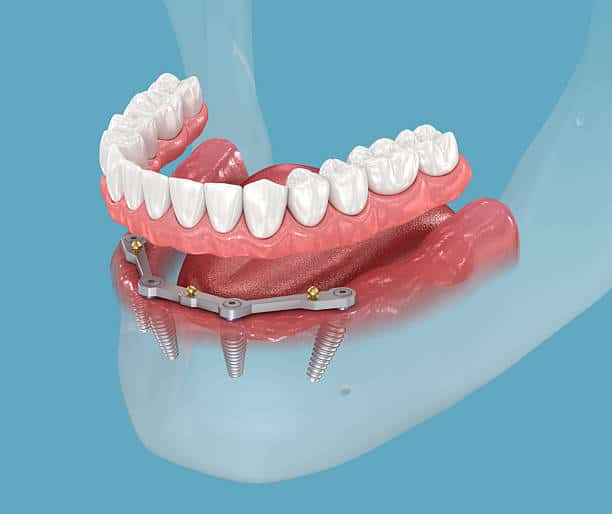
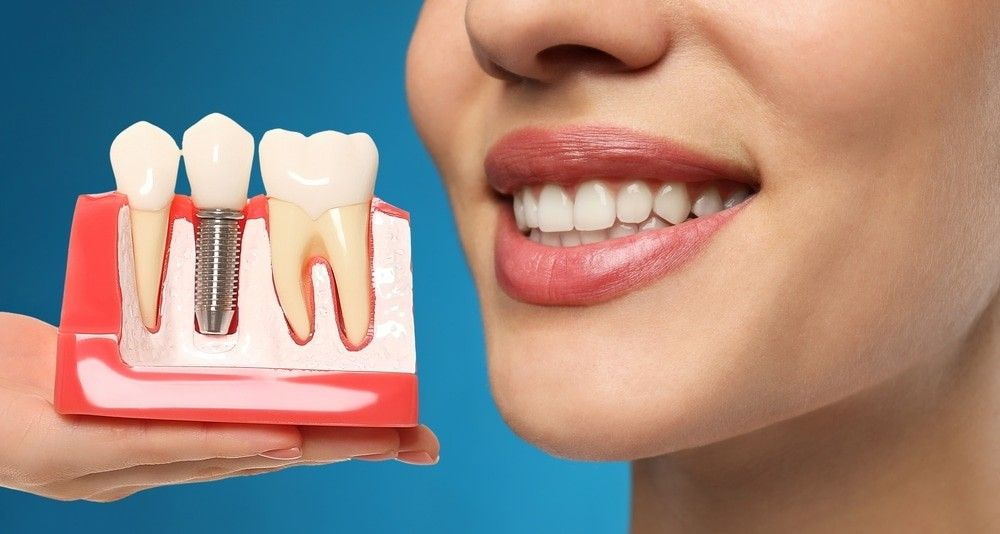
This is the main procedure where the dental implant (a small titanium post) is placed into your jawbone.
Because the area is numb, you won’t feel pain during the procedure, only some pressure.
After the numbness wears off, it’s normal to experience:
- mild swelling
- slight bruising
- some discomfort
This usually peaks within 24–48 hours and then gradually improves.
What you’ll feel: Mild to moderate discomfort for 2–3 days
Stage 4: Osseointegration
This is the stage where your jawbone naturally bonds with the implant. It sounds complex, but from your side, you won’t feel much happening at all. There’s usually no pain during this phase, as everything is healing quietly beneath the gums.
The only important thing: Avoid putting too much pressure on the area so healing isn’t disturbed.
Stage 5: Abutment and Crown Placement
Once osseointegration is confirmed, through clinical assessment and radiographic evaluation, the healing abutment is replaced with the final abutment, and the custom-fabricated ceramic crown is placed. This stage involves minor gingival manipulation only and is associated with minimal discomfort. The result can be a restoration that closely resembles and functions similarly to a natural tooth, depending on individual clinical factors.
When Pain Is a Warning Sign
While short-term post-operative discomfort is expected and normal, certain pain presentations are red flags that require prompt clinical assessment:
Pain that intensifies after Day 3: post-surgical discomfort should follow a consistent downward trajectory. Pain that worsens rather than improves after the 72-hour mark may indicate an early-stage infection (implant site contamination), poor primary stability, or compromised blood supply.
Throbbing pain persisting beyond 10–14 days: by the two-week mark, the surgical site should no longer be generating significant pain. Persistent or escalating pain at this stage warrants immediate follow-up. This can indicate implant failure to osseointegrate, infection, or in rare cases, an allergy to implant componentry.
Pain at the implant site months or years after placement: late-onset pain is uncommon but may be associated with peri-implant disease, a bacterial inflammatory condition affecting the soft tissue and bone surrounding the implant. Left untreated, peri-implantitis can lead to progressive crestal bone loss and eventual implant failure. Regular six-monthly review appointments are essential for early detection.
Your risk profile also matters. Smoking, poorly controlled diabetes, active periodontal disease, and a history of bisphosphonate therapy are all factors that increase the risk of post-operative complications and compromised osseointegration, all of which your clinician should discuss with you during pre-treatment assessment.
Modern Techniques That Improve Comfort and Recovery
Dental implant treatment today is far more comfortable than most people expect.
Modern techniques include:
- precise 3D imaging for accurate placement
- improved anaesthetics for better pain control
- advanced tools that reduce trauma to surrounding tissue
All of this means faster healing and less discomfort for most patients.
Read More: Understanding Dental Implants: What, Why, and Who Should Consider Them
Your Implant Journey at Bexley Dental
At Bexley Dental, every implant patient receives a detailed pre-surgical consultation with our treating dentist. During your assessment, you can expect a thorough review of your imaging, a discussion of your pain tolerance and sedation preferences, a full explanation of post-operative care, and a personalised recovery timeline based on your specific case.
Every patient is provided with detailed pre- and post-operative information to support informed decision-making and a smooth recovery.
The Bottom Line
Yes, dental implants involve a surgical procedure, so some discomfort is normal. For many patients, post-operative discomfort is manageable with standard pain relief and resolves within a few days. With the right planning, proper care, and an experienced dentist, recovery is usually smooth, and for many patients, the long-term functional and aesthetic outcomes reflect the value of careful planning and professional care. https://vuesdafrique.org/
Disclaimer: This article is for general informational purposes only and does not constitute clinical advice. Individual treatment outcomes vary. All dental implant treatment at Bexley Dental is provided following a comprehensive clinical assessment by a registered dental practitioner, in accordance with AHPRA advertising guidelines and the Dental Board of Australia’s code of conduct.